
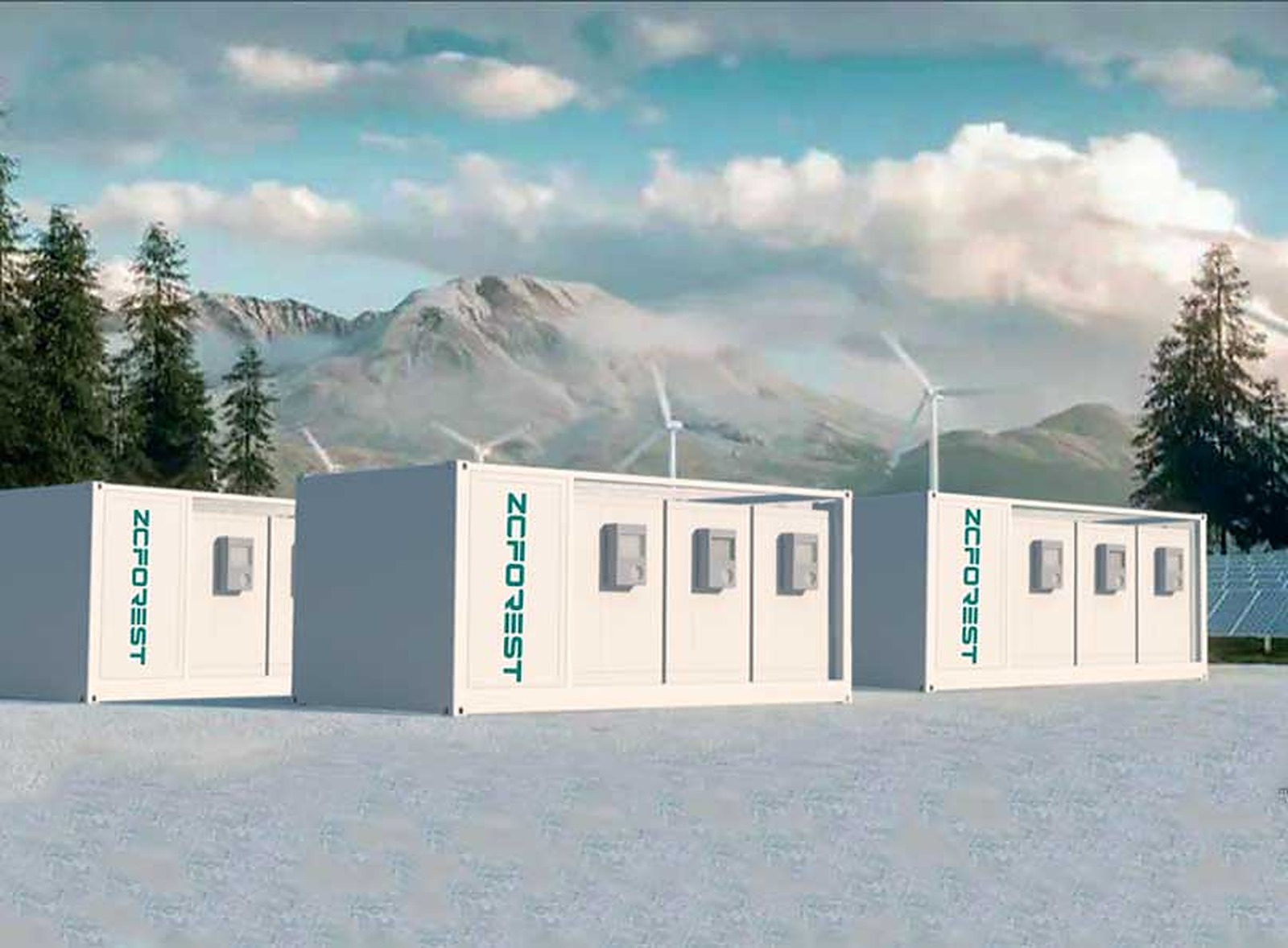
For most of the last decade, the headline story in stationary energy storage has been a slow-but-steady decline in lithium iron phosphate (LFP) cell prices. In 2026, that decline has accelerated into something more interesting: a structural reset that is unlocking entirely new markets for behind-the-meter and grid-tied storage.
For commercial and industrial buyers, the implications are immediate. Projects that were marginal at last year's pricing are now bankable. Locations where the local utility tariff structure didn't justify storage are suddenly attractive. And the ratio of storage cost to PV cost has shifted in ways that are forcing every integrator to reconsider system sizing.
What's actually happening to cell pricing
The drivers behind LFP's price descent are well-documented: massive capacity expansion in China, a cathode-active-material market that has overshot demand, and a maturity curve that has wrung most of the manufacturing inefficiencies out of the cell-to-pack process. What's new in 2026 is the speed at which prismatic cell pricing has moved on the spot market.
The headline numbers obscure a more interesting structural shift. Cell prices have not just dropped; they've decoupled from cathode raw material indices in ways that suggest the new floor is set by manufacturing economics rather than by lithium carbonate prices. That has consequences for how integrators should think about long-term contracts.
Why this matters for project economics
For a typical 1 MWh / 500 kW commercial peak-shaving system, a 30% drop in cell pricing translates into roughly an 18–22% drop in delivered system cost — the difference between cells and the rest of the system (PCS, thermal management, controls, BOS, installation) reflecting that not everything else has scaled at the same rate.
The second-order effect is in project sizing. With cheaper cells, the optimal storage-to-PV ratio shifts toward longer-duration storage. Where 1-hour and 1.5-hour systems used to dominate behind-the-meter deployments, we're now sizing 2-hour and 3-hour systems as the economic default — and four-hour systems are becoming defensible even without explicit grid-services revenue.
What it means for buyers and integrators
Three practical recommendations for anyone with a storage decision in front of them:
- Re-quote stale projects. Anything specced more than six months ago should be re-quoted before final approval — the pricing curve has moved enough to materially change the economic case.
- Consider longer durations. Don't reflexively size for the shortest discharge that meets the immediate use case. Cheap cells make headroom cheap.
- Lock pricing thoughtfully. Falling prices reward delay, but project schedules don't always allow it. Negotiate price-adjustment clauses where possible.
Looking forward
It would be reckless to extrapolate the recent rate of decline into 2027 and beyond — at some point manufacturing margins compress and the curve flattens. But the qualitative shift is durable: storage is now cheap enough that the conversation has moved from "can we afford it" to "what should we do with it."
For ZCForest's customers in South America and Southeast Asia, this is a moment to revisit any storage opportunity that was deemed marginal in 2024 or 2025. The math has changed. We're happy to re-run the numbers on any project — reach out to our team via WhatsApp or email and we'll size, simulate and quote within a few business days.